
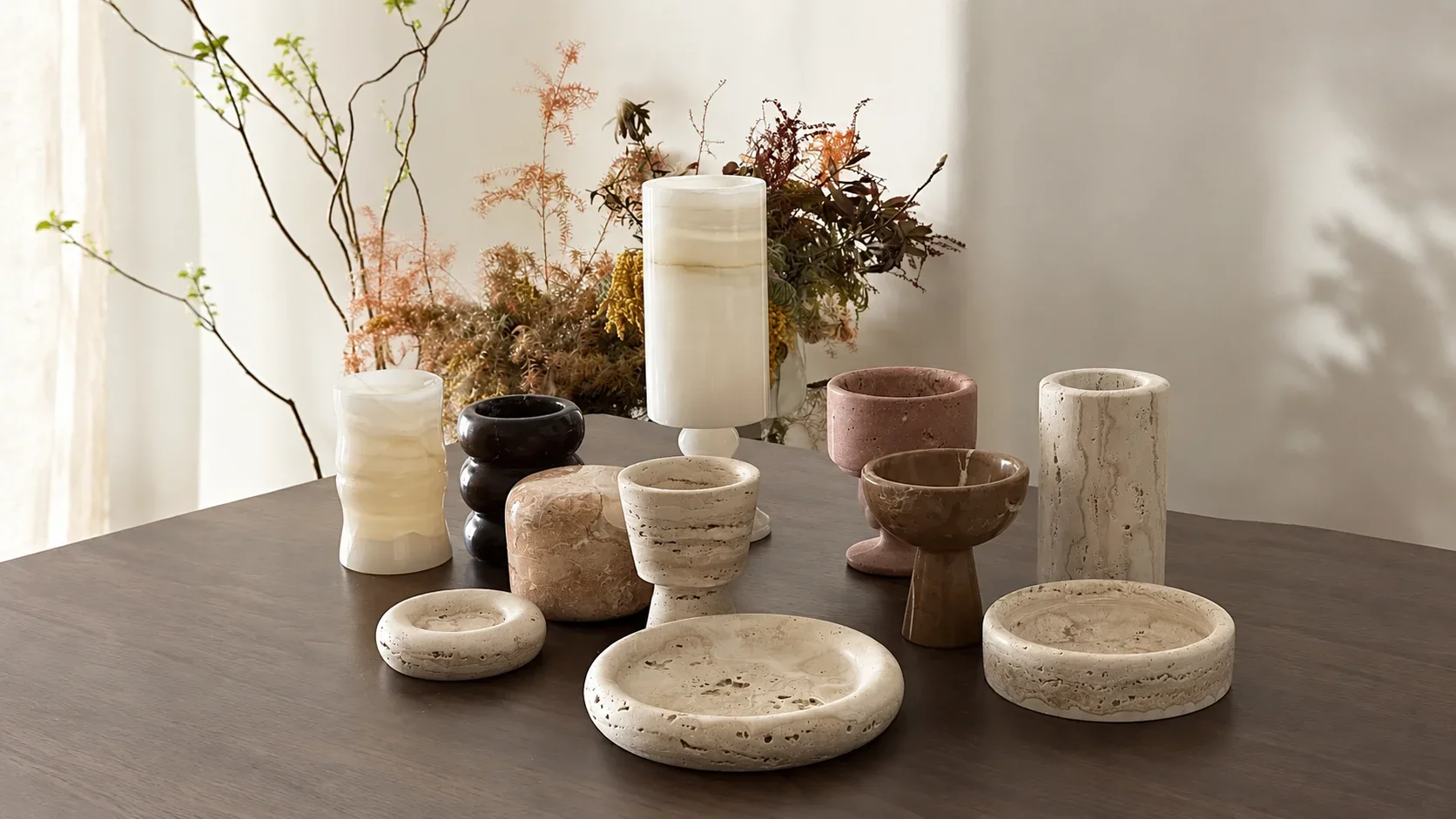
A factory optimized for slabs or dining tables is not automatically efficient at repeatable small decor.
Material range, sample, finish, QC and packing should form one traceable workflow.
MOQ, assortment, private label and export packing matter as much as machining capability.
Supplier landscape
Use supplier type as a first filter, then verify the individual factory with samples and production evidence.
| Supplier type | Best suited to | What to verify |
|---|---|---|
| Slab and project processor | Tiles, slabs, wall panels and architectural packages | Project documentation, installation coordination and large-format finishing |
| Stone furniture factory | Dining tables, coffee tables, consoles and large sculptural forms | Structural engineering, assembly, crate design and large-item logistics |
| Home decor and accessories manufacturer | Trays, bowls, candle holders, bath accessories, vases, lamps and giftware | Small-part tolerances, batch appearance, hand finishing, retail packing and assortment control |
| Trading or sourcing company | Multi-factory purchasing and broad category consolidation | Factory transparency, inspection ownership, margin structure and communication path |
Category fit
Choose specialization before comparing company size
A large stone company may have impressive equipment and still be poorly configured for small home accessories. Small objects create their own challenges: narrow rims, drilled hardware, hand-finished edges, mixed-SKU cartons and visual consistency across a retail collection.
Ask to see products close to your intended scale and construction. Relevant repeat work is stronger evidence than a long catalog containing unrelated slabs, monuments or building materials.
Yunfu ecosystem
Use the cluster advantage without assuming every supplier is the same
Yunfu, Guangdong is a major Chinese stone-processing cluster. Proximity to material markets, specialist tooling, finishing labor, packaging suppliers and freight services can shorten development decisions and widen material access.
Location alone is not proof of capability. Verify which operations happen in-house, who owns sample approval, how subcontracted processes are controlled and whether the team can show the production and packing stages relevant to your order.
OEM workflow
Follow one product from reference to packed shipment
A reliable workflow connects feasibility review, material selection, drawing or marked reference, sample approval, bulk checkpoints, final inspection and export packing. Each stage should produce something the buyer can review rather than relying on generic claims about quality.
Useful evidence includes current material photos, measured sample images, finish close-ups, approved packing construction, carton data and shipment records. The goal is not more paperwork; it is fewer assumptions between teams.
Commercial fit
Evaluate the program, not one sample price
For brands and importers, the real cost includes sample iterations, natural variation management, inspection, packaging, breakage risk and repeat-order consistency. Compare quotations only after material grade, size, finish, packing and Incoterm are aligned.
Ask how the factory handles mixed collections, private-label packaging, replacement pieces and future orders when the original stone block is no longer available. These answers reveal whether the supplier is prepared for a product program rather than a one-off sale.
Due diligence
Verify identity, production and communication separately
Confirm the legal company and payment beneficiary, request a live factory walkthrough or visit, and review current production evidence. Then test communication with a real sample brief: clear questions and documented decisions matter more than fast, vague replies.
No manufacturer should be selected from a self-published ranking alone. Shortlist by category fit, verify with evidence and let the sample process show how the working relationship will function.
First-round supplier shortlist
By this stage, the longlist should already be divided by supplier type. Use these six checks to decide which factories are ready for a real sample brief and commercial comparison.
- Relevant products at a similar scale and level of detail
- Material sourcing and natural-variation control method
- Sample approval, tolerance and finish records
- In-house and subcontracted production boundaries
- QC evidence and product-specific export packing
- MOQ, lead time, trade term and repeat-order process
About the perspective behind this guide
This guide is published by Yusheng Stone, a Yunfu manufacturer focused on marble, travertine and natural stone home decor collections. Our scope includes trays, bowls, candle holders, bathroom accessories, vases, table lamps and custom stone objects, supported by sampling, OEM production and export packing.